There are some memories from childhood that poverty cannot erase. In fact, sometimes, the things we did because we could not afford what others had become the very things that later taught us something about dignity, creativity and resilience.
One of those memories for me is making my own exercise books.
My father would bring home plain sheets of paper. They were just ordinary, unruled sheets. But to me, they were the beginning of something special. My father had so many dependants that his meagre salary from the Benue State Government couldn’t withstand our needs, beyond paying school fees.
So, with his guidance, I would take a ruler, a red pen and a blue pen and begin the painstaking work of turning those plain sheets into exercise-book paper.
On one side of each sheet, I would carefully draw 33 horizontal lines. Blue lines Then I would turn the sheet over and draw another 33 lines on the other side. After that, I would draw vertical red lines along the margins, two on each side, to give the pages the appearance and structure of a proper exercise book.
Altogether, I would draw about 70 lines on each sheet.
Seventy lines.
If I needed a 60-leaf notebook, I had to repeat the process 60 times.
That meant roughly 4,200 lines just to make one notebook.
Four thousand, two hundred lines.
Today, when I think about it, I realise how much patience that required from a child. I wasn’t thinking about resilience or resourcefulness then. I was simply trying to make a notebook for school.
But I was also learning something.
I was learning to create something out of what was available. This lesson has stayed with me
When all the sheets were ruled, I would make the cover. I would get a piece of cardboard and cut it to the size of the notebook. Then I would decorate it. Sometimes I drew beautiful flowers on the cardboard, coloured them and tried to make the cover look as attractive as possible.
Then came the binding.
I would gather the sheets together, make two holes along the left-hand side by driving nails through them. I would find thread and carefully tie the ruled sheets together so that the pages stayed firmly in place. Afterwards, I would cover the binding with masking tape or whatever tape was available to strengthen it.
And there it was.
My own exercise book.
Handmade.
Different.
Unique.
My father, Akpallah Okenyodo, would look at it and tell me how beautiful and amazing my notebook was.
And he meant it.
That mattered.
This was the same way he made up eagerly sweep the compound every morning and evening. If you complained that the compound wasn’t dirty and needed no sweeping, he’d get up show you the patterns on the floor. “Can’t you see the beautiful designs you create with your broom?” he’d ask, with a grin on his face. “Sweeping is not only about cleanliness; it’s about beautifying our environment with designs.”
That was how he made me feel. Because I knew why I was making those books. We were not making them because handmade notebooks were fashionable. We were making them because money was scarce.
But my father never made me feel deficient because of it.
That is one of the greatest gifts he gave me.
He could have made me feel that we were poor. Instead, he made me feel that I was capable. And special.
He could have made me feel embarrassed that my notebook was not bought from a shop. Instead, he made me feel proud that I had made something with my own hands.
And so, whenever I went to school with my notebook, I knew something that perhaps nobody else knew.
Mine was different.
Nobody had bought another one exactly like it.
It was mine.
I had drawn every line.
I had decorated the cover.
I had helped bind the pages.
There was a little piece of me in it.
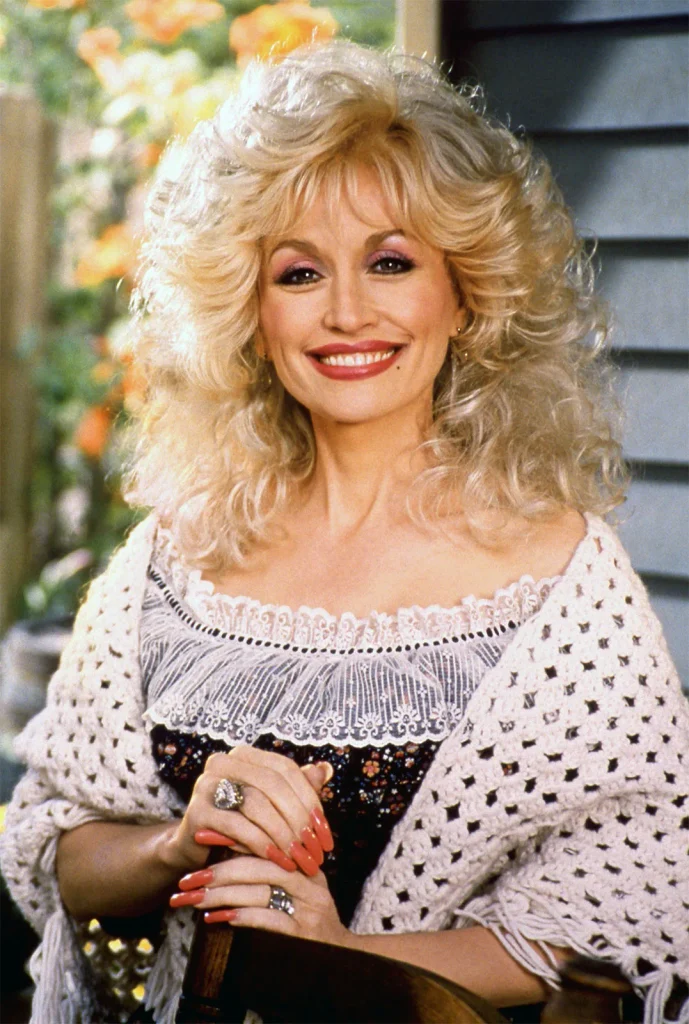
Much later in life, listening to Dolly Parton’s “Coat of Many Colours”, I found myself travelling back to those childhood years.
I understood that song in a way that goes beyond the words.
Dolly Parton tells the story of a coat her mother made from scraps because the family could not afford a new one. To someone looking from the outside, it could have been a symbol of poverty.
But to the child wearing it, it became something else.
It became a coat made with love.
It became beautiful.
It became a source of pride.
That is how I now remember those notebooks.
Yes, poverty was part of the reason I made them.
There is no need to romanticise poverty. Drawing 4,200 lines to make a 60-leaf notebook was hard work. There were probably children whose parents could simply buy exercise books from the market and send them to school.
But my father gave me something that money could not buy.
He gave me dignity.
He made me see possibility where there was scarcity.
He taught me, without perhaps ever sitting me down to teach me, that something does not have to come from a shop to have value.
Sometimes, you can make your own.
Sometimes, what looks like lack from the outside becomes creativity on the inside.
Sometimes, the most beautiful things in our childhood are made from whatever our parents can afford to put in our hands.
And sometimes, years later, we realise that those ordinary things were quietly preparing us for the person we would become.
So, when I heard of Dolly Parton’s passing in these last few days since her death was announced, Coat of Many Colours took me back to those notebooks.
To the plain sheets my father brought home.
To the ruler in my hand.
To the red and blue pens.
To the thousands of lines.
To the cardboard covers.
To the flowers I drew and coloured.
To the nails, thread and masking tape.
To my father’s voice telling me how beautiful my notebook was.
And I realised that my father had given me my own “coat of many colours.”
It was not a coat.
It was an exercise book.
But, like Dolly’s coat, it carried a story.
A story of scarcity without shame.
A story of poverty without humiliation.
A story of a child who learned to make something beautiful with what was available.
And, perhaps most importantly, a story of a father who understood that when you cannot give a child everything, you must never take away their sense of worth.
That is the part I will always remember.
May Dolly Parton’s soul rest in peace.
And may we never forget the quiet, often invisible ways our parents turned the things we lacked into lessons about the things we could become.