
Reading makes writing.
I often tell my team that communication is not complete when content is produced. It is complete when meaning is made. That distinction may become increasingly important in the age of artificial intelligence.
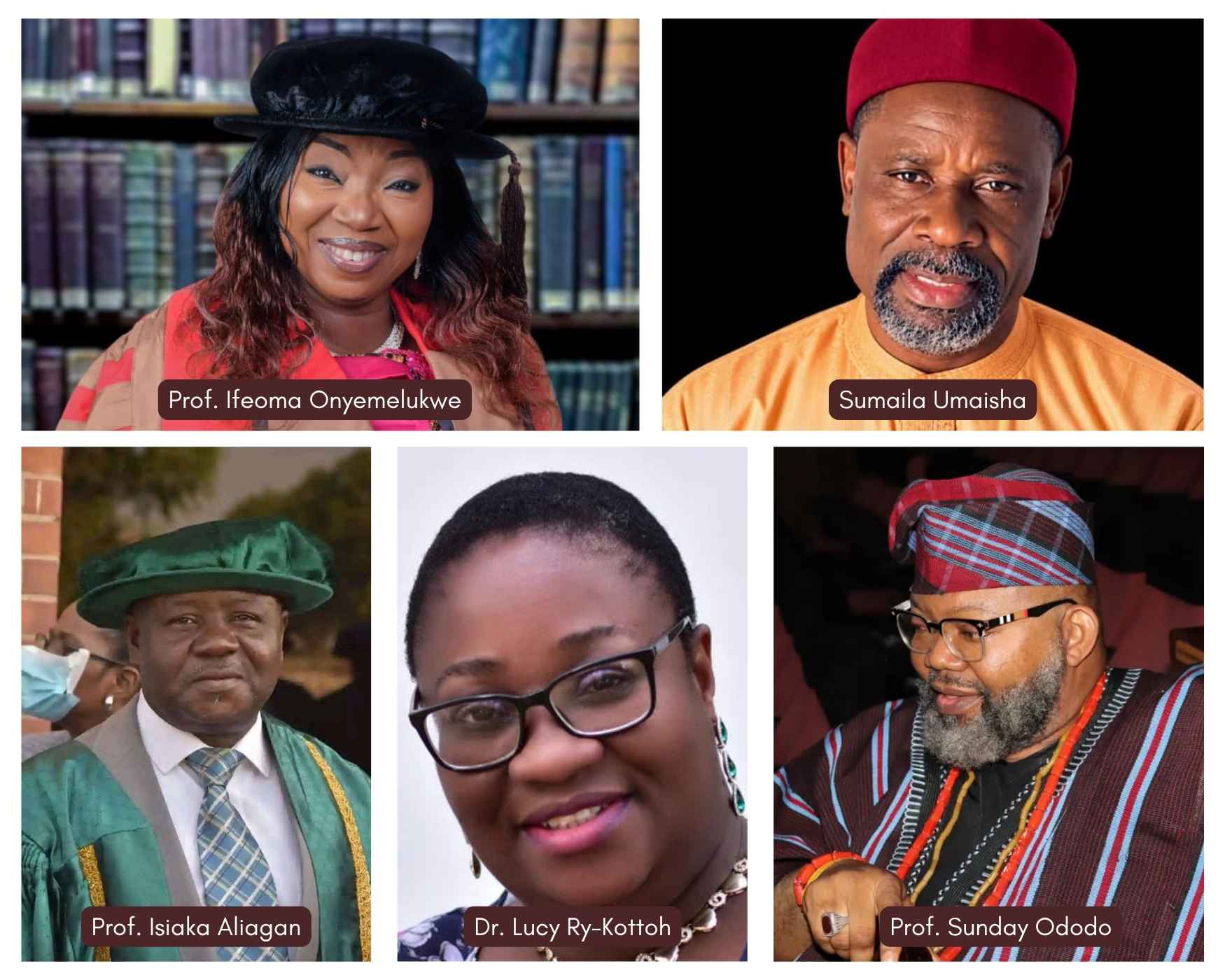
I must confess that, going into the 16th Authors’ Hub Monthly Panel Discussion, I had a small reservation about the theme. The idea of the role of the pen (the writer, the journalist, the poet, the storyteller) in building a better society is not new. We have had this conversation many times.
Writers have always been called the conscience of society. Journalists have been described as the watchdogs of democracy. Literature has been celebrated as a vehicle for empathy, social transformation and peacebuilding. So, when we chose the theme “Pen for Peace: Harnessing Journalism and Literature for a More Humane Society,” I wondered whether we were simply revisiting familiar territory. But I was wrong. Or, at least, the conversation turned out to be far more complicated than I had anticipated.
Moderating the session gave me the opportunity to listen closely to practitioners who are not merely theorists of the written word but people who have spent years working within the ecosystems of creative writing, journalism, publishing, theatre administration, literature and development communication. And they brought the subject alive from very different directions.
Dr. Lucy Ry-Kottoh, a publishing scholar from KNUST, Ghana, reminded us that the journey from manuscript to reader is not neutral. Publishers, editors, and educators are gatekeepers. What they select, edit, package and distribute can influence how societies understand themselves and others.
Prof. Sunday Ododo, former General Manager and CEO of the National Arts Theatre, pushed the conversation beyond conventional theatre. His idea of participatory and interrogative theatre, including the concept of WhatsApp Theatre, challenged us to think about how storytelling can enter the digital spaces where contemporary Nigerians increasingly encounter information, misinformation, hate speech and political narratives.
Prof. Ifeoma Onyemelukwe of Ahmadu Bello University took us back to the long and sometimes dangerous history of the writer as a social actor. From censorship and imprisonment to exile, poverty and cultural restrictions, she reminded us that writing has never been an entirely safe occupation when the writer takes society seriously.
And then there was Prof. Isiaka Aliagan, who perhaps brought the conversation closest to the uncomfortable realities of our present digital moment. His discussion of the “Olodo Uprising,” post-intellectualism, artificial intelligence, misinformation, propaganda, and the changing media ecosystem forced us to confront a difficult question: what happens to serious writing when speed, virality and visibility become more valuable than thought? What happens now that those who are supposed to read our works are now asking, “Na book we go chop?”, “Who education ep [help]?”, or “Adulthood na scam”?
Of course, as expect, the panel was remarkably optimistic about the continuing power of journalism, literature and theatre to humanise society, but I left the session less certain. And that is not because I disagreed with the panelists. Rather, because I think there is another problem we did not fully resolve.
Are we writing more and reading less?
This is what I consider to be the strange paradox of the AI age. We are living through an extraordinary explosion of content. Artificial intelligence can now produce an article, poem, press release, speech, story, social media post or essay in seconds. The barriers to writing have collapsed. This is potentially liberating. It means more people can tell stories. More people can publish. More voices can enter public discourse. Writers who previously lacked access to traditional publishers can distribute their work through digital platforms. Journalists can use technology to research, analyse, translate and distribute information faster.
But there is another side to this revolution. I worry that we may be entering an era in which there is more writing but less reading; more content but less contemplation; more publication but less authorship; more words but less voice. This is not yet a research finding. It is my hunch, a concern that I hope researchers will test. If you belong to some WhatsApp platforms, you’d notice people writing longer, more fluent prose with ideas that sound like they suddenly became professors. They copy entire conversations, hand them over to Meta AI and wait for a microwaved response.
I increasingly encounter writing that is technically competent but strangely interchangeable. The sentences are polished. The grammar is correct. The structure is neat. The arguments are often sensible. But where is the writer? Where is the unmistakable voice? Where is the strange metaphor that could only have come from one particular human being? Where is the rhythm, eccentricity, humour, anger, vulnerability, contradiction and lived experience that makes writing memorable? If artificial intelligence makes it possible to produce an almost unlimited supply of competent prose, perhaps the scarce resource of the future will not be writing. It will be attention. And perhaps even more importantly, deep reading.
This matters enormously for the idea of the pen for peace. The central insight from our panel was that writing can humanise. Literature can make us encounter the “other”. Journalism can put facts into public consciousness. Theatre can create spaces where communities examine conflict. Storytelling can replace stereotypes with human faces. But all of these mechanisms depend on something we sometimes take for granted: Somebody has to read, listen, watch, reflect and care.
Chinua Achebe’s Things Fall Apart does not humanise Okonkwo, his family and his society merely because Achebe wrote the novel. It does so because generations of readers entered that world. Chimamanda Ngozi Adichie’s Half of a Yellow Sun does not make the Nigerian Civil War emotionally intelligible simply because it exists as a book. Its power comes from readers inhabiting the experiences of its characters.
Journalism does not automatically produce understanding because facts have been published. In the same way, theater does not automatically produce reconciliation because a play has been performed. I often tell my team that communication is not complete when content is produced. It is complete when meaning is made. That distinction may become increasingly important in the age of artificial intelligence.
Are we suffering from confirmation bias?
That’s another question I have been unable to shake off since the webinar. Were we, perhaps, too optimistic? As writers, journalists, publishers, theatre practitioners, academics and communication professionals, we have an obvious interest in believing in the transformative power of our craft. We have spent our lives believing that words matter. We have evidence that words matter. History gives us countless examples. But could that history itself become a source of confirmation bias?
We remember the books that changed societies. We remember the journalists who exposed corruption. We remember the poets who challenged dictators. We remember the playwrights who confronted injustice. We remember the writers whose words survived censorship, imprisonment and even death.
But what about the millions of words that nobody read? What about the journalism that disappeared into the news cycle? What about the books that never found readers? What about the social media posts that were technically brilliant but consumed and forgotten within thirty seconds?
And what happens when AI makes it possible to produce millions more? Perhaps the challenge before the creative writing ecosystem, journalism profession, publishing industry and peacebuilding community is no longer simply how to produce powerful messages. And I guess it has never been because all the Soyinkas and Achebes,and even the Senghors and Nkrumahs before them, took time to animate what they wrote by joining or even organising protests, writing to despotic governments, writing opeds and engaging in public speaking. I will write about this in another post.
So, the task is how to create conditions in which people want to stop, read, listen, think and feel. And act.
This is where I think the conversation about artificial intelligence needs greater nuance.
I am not interested in the simplistic argument that AI is going to destroy writing. It won’t. The future may belong to distinctive human voices because technology has always changed the way human beings tell stories. The printing press changed publishing. Radio changed storytelling. Television transformed journalism. The internet disrupted newspapers. Social media changed public communication. AI will do the same, and perhaps on a much larger scale.
The question is not whether writers should use AI. They probably must learn to use it. Prof. Aliagan’s challenge to writers to “move with the times” is therefore particularly important. The creative community cannot afford to become technologically nostalgic. Writers and journalists need digital literacy, AI literacy, audience development skills, and new approaches to publishing and monetisation.
But using AI should not mean surrendering the most valuable thing a writer possesses:
a distinctive human voice.
The future writer may need to become less like a content factory and more like an artist, investigator, editor, researcher, storyteller and witness. AI can help generate language. But human beings still have to decide what is worth saying.
And perhaps that is where the future of the pen lies. We may also need a new definition of the “pen”. The pen is no longer simply a physical writing instrument. It is a metaphor for the entire communication ecosystem. It includes the novelist and the investigative journalist. The poet and the editor. The publisher and the theatre director. The podcaster and the documentary filmmaker. The WhatsApp storyteller and the social media journalist. The development communication practitioner and the community storyteller.
The pen also includes the algorithms, platforms, and artificial intelligence systems through which our words increasingly travel. That makes editorial gatekeeping even more important.
One of the strongest ideas from Dr. Ry-Kottoh’s presentation was the need for sensitivity readers and stronger editorial processes to ensure that cultural representations do not reproduce misunderstanding or fuel social tensions. In an age of AI-generated content, this principle should perhaps extend much further.
We need editors who ask: Is it true? Is it original? Is it culturally accurate? Is it fair? Is it necessary? Who could be harmed by it? Does it humanise or dehumanise? Does it add something to the public conversation, or is it simply adding to the noise?
Ultimately, my biggest takeaway from moderating the Authors’ Hub discussion is the need to move from content production to meaning production. The challenge facing writers and journalists is not merely how to write more. We already have the technology to write more. The challenge is how to make writing matter.
How do we produce journalism that people trust? How do we produce literature that makes readers inhabit another person’s humanity? How do we create theatre that makes communities confront their own prejudices? How do we use digital storytelling without allowing digital platforms to dictate the depth of our thinking?
How do we preserve the slow, reflective and sometimes uncomfortable process of reading in a culture increasingly organised around speed? And how do we ensure that artificial intelligence becomes a tool for extending human creativity rather than a machine for manufacturing an endless supply of indistinguishable words?
These questions were not fully answered at the Authors’ Hub. Perhaps they shouldn’t have been. A good panel discussion should not always leave you with answers. Sometimes its greatest value is that it leaves you with better questions.
At the end of the webinar, I was convinced that the pen still has power. But I am no longer convinced that the power of the pen can be taken for granted. The panelists made a compelling case that journalism, literature and theatre can build empathy, challenge injustice, counter misinformation and contribute to reconciliation. The session concluded with a shared commitment to strengthen editorial gatekeeping, embrace digital platforms responsibly, promote inclusive publishing and turn discussion into practical action.
I agree.
But I want us to go one step further. What happens to the pen for peace when society stops reading deeply? What happens when there are thousands of beautifully written articles competing for the same few seconds of attention? What happens when AI can produce a plausible poem faster than a human poet can experience the emotion that inspires one? What happens when journalism is drowned not by censorship but by abundance? And what happens when the people most vulnerable to misinformation are also the people least likely to read the long, carefully researched correction?
These are not arguments against artificial intelligence. I am a big propent of using AI responsibly. They are arguments for better journalism, deeper reading, stronger editorial standards, distinctive storytelling, media literacy, literary culture, and more intentional communication.
Perhaps the next conversation should therefore not be simply about the “Pen for Peace.” Perhaps we should ask: Who is still reading the pen?
And if the answer is fewer people than we imagine, then our task as writers, journalists, publishers, editors, theatre practitioners, educators and development communication professionals is not simply to keep writing. It is to make people want to read again. In the same way that Soyinka, Achebe, Sa’adu Zungur, Azikiwe, Senghor and Nkrumah did: meet the people face to face and engage their desires and needs. Because ultimately, the power of the pen does not reside in ink, paper, keyboards or artificial intelligence. It resides in the human encounter that happens when one person’s experience enters another person’s imagination.
That is where empathy begins. And perhaps that is where peace begins too.